
Single Head vs Dual Head DTF Printer: Speed, Cost and Productivity
Single Head vs Dual Head DTF Printer: Speed, Cost and Productivity
Updated: November 2026 | EraSmart
When choosing a DTF printer, one important decision is whether to buy a single-head or dual-head machine. Both configurations can produce high-quality DTF transfers, but they differ in production capacity, equipment cost and business applications.
A single-head DTF printer is generally more affordable and suitable for startups. A dual-head DTF printer offers greater production potential and may be a better choice for businesses handling regular orders.
But does a dual-head DTF printer print twice as fast? Not necessarily.
Quick Answer:
-
Single-head DTF printer: Best for beginners, small businesses and lower-volume production.
-
Dual-head DTF printer: Best for growing print shops and businesses that need higher production capacity.
The right choice depends on your daily workload, print quality requirements and budget.
1. Single Head vs Dual Head DTF Printer: Key Differences
| Comparison | Single Head | Dual Head |
|---|---|---|
| Printhead quantity | 1 | 2 |
| Initial investment | Generally lower | Generally higher |
| Production potential | Small to moderate | Higher, depending on configuration |
| Printing workflow | Simpler | More complex |
| Ink system | Fewer printheads to maintain | More components to manage |
| Maintenance cost | Generally lower | May be higher |
| Best for | Startups and small shops | Growing and commercial businesses |
Actual performance varies by printhead model, printer design, print mode and software.
2. What Is a Single-Head DTF Printer?
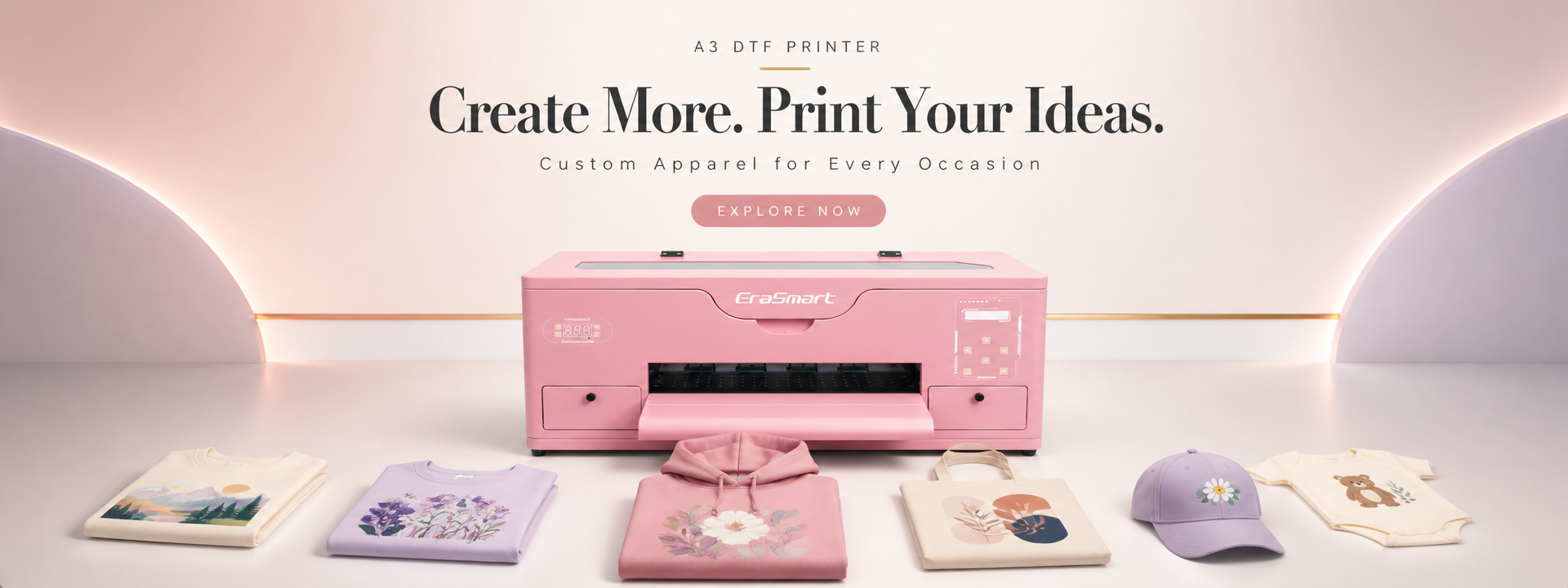
A single-head DTF printer uses one printhead to print designs onto PET transfer film.
It is commonly found in compact A3 and entry-level commercial DTF machines.
Main advantages:
-
Lower initial equipment cost.
-
Simpler printing system.
-
Suitable for small-batch orders.
-
Fewer printheads to maintain.
-
A practical starting point for new businesses.
Limitations:
-
Lower production potential compared with a comparable dual-head configuration.
-
Large orders may require longer printing time.
-
Less flexibility when production demand increases.
Who should choose it?
A single-head DTF printer is suitable for home-based T-shirt businesses, startup entrepreneurs, small studios and sellers handling approximately 10–30 garments per day, depending on artwork size and print settings.
3. What Is a Dual-Head DTF Printer?
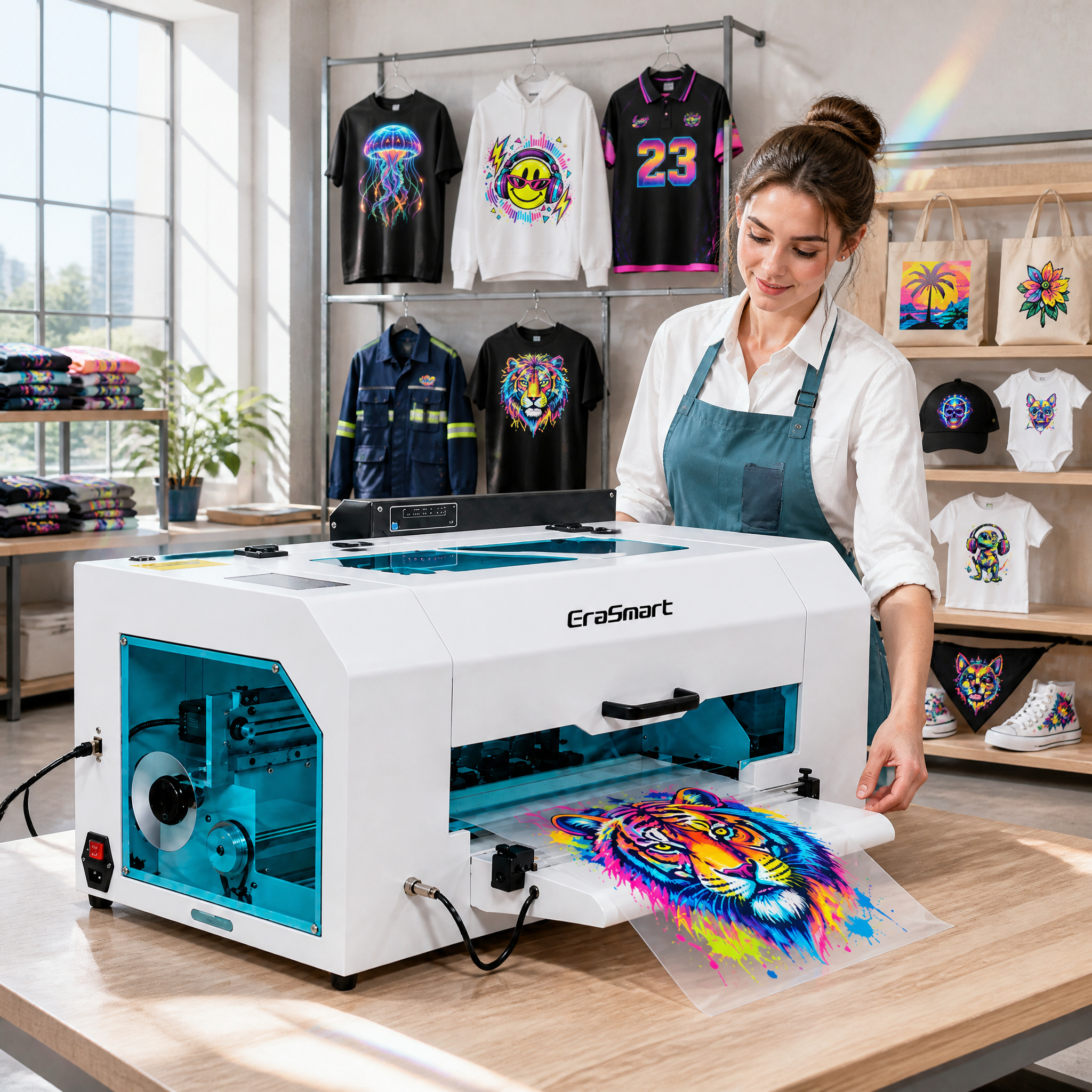
A dual-head DTF printer uses two printheads to increase printing capacity. Depending on its design, the heads may work together in a specific printing arrangement to improve throughput or support different ink-channel configurations.
Dual-head systems are commonly used in larger A3 and A1 commercial DTF printers.
Main advantages:
-
Higher production potential.
-
Better suited to regular commercial orders.
-
Can support larger production workflows.
-
Useful for businesses planning to expand capacity.
Limitations:
-
Higher purchase price.
-
More printhead-related maintenance.
-
More complex ink delivery and calibration requirements.
-
Actual speed improvement depends on the head arrangement and printing mode.
Who should choose it?
A dual-head DTF printer is worth considering if you have consistent orders, operate a professional print shop or need to increase production capacity.
4. Is a Dual-Head DTF Printer Twice as Fast?
No. Two printheads do not automatically mean double the printing speed.
Actual productivity depends on:
-
Printhead arrangement: Whether both heads contribute to the same production workflow.
-
Printhead model: XP600, i1600 and i3200 configurations have different capabilities.
-
Pass count and resolution: Higher-quality modes may require more printing time.
-
Artwork size: Large designs and heavy ink coverage affect throughput.
-
RIP software: Data processing and print settings influence efficiency.
-
Printer mechanics: Carriage movement and film feeding also matter.
For example, a dual XP600 DTF printer may offer greater output potential than a single XP600 model, but the exact improvement must be verified through actual production testing.
Buying tip: Ask suppliers to demonstrate both configurations using the same artwork, print width, resolution and pass count.
5. Cost Comparison: Single Head vs Dual Head
A single-head machine usually has a lower purchase price. A dual-head machine requires a higher initial investment because it includes additional printhead hardware and may need a more advanced ink and control system.
| Cost Item | Single Head | Dual Head |
|---|---|---|
| Printer price | Lower | Higher |
| Printhead replacement | One head | Two heads |
| Ink consumption | Depends on coverage | Depends on coverage and configuration |
| Cleaning supplies | Required | Required |
| Maintenance | Generally simpler | More components to maintain |
| Production capacity | Lower potential | Higher potential |
Remember to include the cost of ink, PET film, hot-melt powder, curing equipment, heat press, spare parts and technical support.
Which is more cost-effective?
If your order volume is small, a single-head printer may offer better value because you avoid paying for unused production capacity.
If you regularly receive larger orders, a dual-head printer may help reduce production time and improve labor efficiency. Compare the additional investment with the extra revenue your business can realistically generate.
6. Which Configuration Is Better for Your Business?
| Business Situation | Recommended Configuration |
|---|---|
| First DTF printer | Single head |
| Home-based T-shirt business | Single head |
| 10–30 garments per day | Single or dual head |
| Growing print shop | Dual head worth considering |
| Regular bulk orders | Dual head |
| Professional transfer production | Dual head or higher-capacity system |
Choose Single Head If:
-
You are starting a DTF business.
-
Your daily order volume is relatively small.
-
Your budget is limited.
-
You prefer a simpler machine configuration.
Choose Dual Head If:
-
Your business already has regular orders.
-
Production time is becoming a bottleneck.
-
You need greater printing capacity.
-
You have enough space and budget for commercial equipment.
7. EraSmart Single-Head and Dual-Head DTF Printers
EraSmart offers different DTF printer configurations for small businesses and commercial printing operations.
Single-Head Options
EraSmart single-head models include selected A3 configurations using XP600 printheads.
Depending on the model, features may include:
-
Approximately 30–38 cm printing width.
-
Hoson control board.
-
White-ink circulation.
-
Automatic cleaning functions on selected models.
-
Compact design for small print shops.
These models are suitable for startups and businesses that need a practical entry-level or compact commercial setup.
Dual-Head Options
EraSmart also offers dual-head configurations for buyers who need greater production potential.
Depending on the model, options include:
-
A3 and A1 printing formats.
-
Dual XP600 or i1600 configurations.
-
Selected A1 models with dual i3200 printheads.
-
Production-oriented control and ink-management systems.
These machines are worth considering for growing businesses and professional printing operations.
Specifications, printhead combinations and standard functions vary by model. Confirm the exact configuration and production speed with EraSmart before ordering.
Explore EraSmart DTF printers:
Official website: https://www.erasmart.com/
Made-in-China store: https://erasmart.en.made-in-china.com/
8. Frequently Asked Questions
Q1: Is a dual-head DTF printer twice as fast as a single-head printer?
Not necessarily. Speed depends on printhead arrangement, print mode, resolution and machine design.
Q2: Is a single-head DTF printer good for beginners?
Yes. It generally has a lower purchase cost and a simpler configuration.
Q3: Does a dual-head DTF printer use more ink?
Ink consumption depends mainly on artwork coverage, print settings and production volume, not simply the number of printheads.
Q4: Which configuration is easier to maintain?
Single-head machines generally have fewer printhead-related components, but maintenance also depends on machine design and technical support.
Q5: Can a single-head DTF printer handle commercial orders?
Yes. A suitable single-head model can handle commercial work, provided its actual output meets your delivery requirements.
Q6: Should I buy dual XP600 or dual i1600?
Compare the complete machine configuration, production speed, print quality, maintenance costs and supplier support before deciding.
Final Verdict: Single Head or Dual Head?
A single-head DTF printer is a practical choice for beginners, startups and smaller workloads.
A dual-head DTF printer is worth considering when your business has consistent orders and needs greater production capacity.
Do not choose based on printhead quantity alone. Compare actual printing speed, print quality, total investment and after-sales support.
Looking for the right DTF printer for your business? Contact EraSmart with your preferred print width, daily production target and budget. Our team can help you compare single-head and dual-head configurations.


